
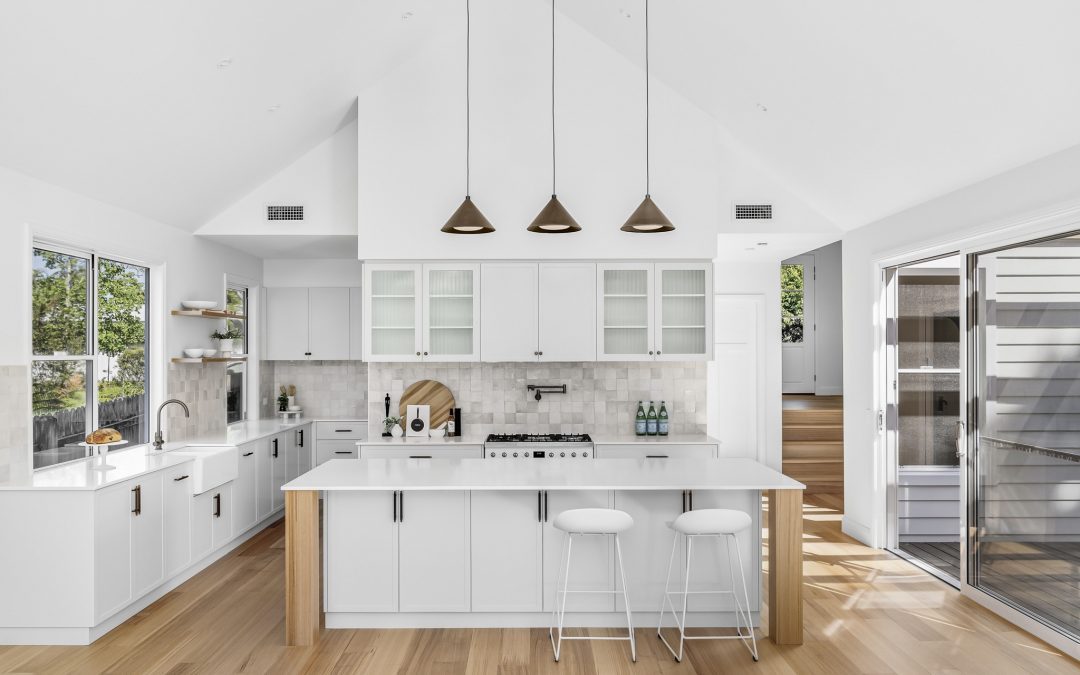
There’s a reason some kitchens feel instantly polished the moment you walk into them. It’s definitely not always the benchtop, and not necessarily the appliances either. Often, it comes down to details most people don’t consciously notice. The way timber flows across a row of cabinets. How the grain continues from one door to the next. The absence of visual interruptions. That level of continuity is rarely accidental.
In custom kitchen design, grain matching plays a major role in creating cabinetry that feels cohesive and considered. It takes planning, careful material selection, and a good understanding of how timber behaves long before manufacturing begins. The direction of the grain can influence not only the appearance of the cabinetry but also the entire look of a kitchen.
Why Grain Matching Matters in Custom Cabinetry
Wood rarely behaves in perfect straight lines. Every veneer sheet and timber panel has its own markings, colour shifts, and grain movement. That is part of what makes timber appealing in the first place.
Imagine a row of cabinet doors where the grain suddenly changes direction from one panel to the next. Nothing is technically wrong with the cabinetry, and yet something can feel slightly off. The eye notices the interruption, even if you cannot immediately explain why.
Grain matching helps avoid that.
By carefully sequencing veneer sheets and timber panels, cabinet makers can create a more continuous look across drawers, doors, and larger cabinet runs. Instead of competing patterns, the grain works together as a single visual feature.
In larger kitchens, this can make a noticeable difference, particularly on:
- Long runs of cabinetry
- Large kitchen islands
- Full-height pantry walls
It is one of those details many people do not actively notice, but it simply makes the kitchen feel more cohesive and balanced.
Understanding Grain Direction
When people talk about grain matching, they’re usually also talking about grain direction.
In simple terms, it’s the direction the timber grain runs across a cabinet door, drawer front, or panel. Sometimes, it runs vertically. Other times, horizontally. Occasionally, designers use more decorative layouts depending on the look they’re trying to achieve.
Vertical grain tends to feel a little more modern because it draws the eye upward and can make cabinetry appear taller. Horizontal grain creates a different effect, though. The pattern stretches the eye across the room, which is why it’s often used on long runs of cabinetry or larger kitchen islands.
Neither option is automatically better. A lot depends on the kitchen itself. The layout, the timber species, the size of the cabinetry, and even the overall style of the home can all influence which direction feels right. In many cases, it’s less about following a rule and more about choosing the grain direction that complements the space as a whole. Explore our kitchens and see how different materials and finishes can come together in real-world projects.
Not All Grain Patterns Behave the Same Way
One thing worth knowing is that grain matching isn’t a one-size-fits-all process. Some timbers are fairly predictable. Others have a lot more movement, variation, and personality to work with.
For example:
- Oak tends to have a strong, consistent grain that works well when you’re aiming for continuity across multiple cabinet fronts.
- Walnut usually has more variation and movement, which is one reason it’s often chosen for feature cabinetry and statement islands.
- Ash, blackbutt, and spotted gum each bring their own texture, colour variation, and grain patterns to the table.
The more character a timber has, the more attention usually needs to go into matching it well.
A beautiful grain can easily get lost if it clashes with everything around it. Cabinetry, benchtops, splashbacks, flooring, and even smaller details like kitchen handles all contribute to the overall look. When those materials work together, the grain feels intentional rather than competing for attention. And that’s usually where the best results come from.
Our range of kitchen benchtops and splashbacks is often chosen alongside cabinetry finishes to create a cohesive overall look.
Book Matching, Slip Matching, and Sequence Matching
Cabinet makers can use several different assembling techniques depending on the look they’re trying to achieve. Book matching is probably the easiest to recognise. Veneer sheets are opened and laid out like the pages of a book, creating a mirrored effect that can look quite dramatic, especially on larger panels. Slip matching creates a softer look. Instead of flipping the veneer, sheets are placed side by side in the same direction. The result tends to feel cleaner and more uniform, which is why it’s often used in contemporary kitchens.
Then, there’s sequence matching. This involves using consecutive veneer sheets in order so the grain continues naturally from one cabinet front to the next. It’s a popular choice for large islands, tall pantry walls, and other areas where the cabinetry becomes a major design feature.
None of these techniques is automatically better than the others. Some timbers suit certain methods more naturally. The decision simply comes down to the overall look the homeowner wants to achieve. The goal is always the same, though: making the cabinetry feel connected rather than pieced together.
The Connection Between Grain Matching and Quiet Luxury
One design trend that continues to influence kitchen design is quiet luxury. Rather than relying on bold statements, it focuses on craftsmanship, material quality, and thoughtful detailing. Grain matching fits naturally within that approach. A beautifully matched timber veneer may not be the first thing someone notices. Yet it contributes to the sense of quality people feel when they’re standing in the space. The uninterrupted flow of timber creates a calmness that works particularly well in modern kitchens.
Many of the ideas discussed in our article on quiet luxury kitchens align closely with the role grain matching plays in premium cabinetry design.
Why It Requires Careful Planning
Good grain matching starts well before installation. Panel sizes, appliance locations, door layouts, and even hinge placements can all affect how the grain flows across the finished cabinetry.
That is why we encourage clients to visit our showroom during the design phase, where they can see timber colours, textures, and grain variation in person. It may seem like a small detail, but when planned properly, grain matching helps create cabinetry that feels balanced, intentional, and visually connected.
Even surrounding elements such as handles, lighting, and storage solutions from our range of kitchen accessories tend to sit more naturally within the overall design.
Creating Cohesive Kitchens Through Thoughtful Design
The direction of your wood grain might seem like a small decision at first, but it can have a significant impact on the finished kitchen. When grain patterns flow naturally across cabinetry, the entire space feels more connected, cleaner, and more refined.
At Krauss Kitchens, we see grain matching as part of the design process from the very beginning. By carefully considering materials, layout, and craftsmanship together, we create kitchens that not only look beautiful on day one but continue to feel timeless for years to come.