
Search this question, and you will get an answer somewhere between $8,000 and $100,000, which is about as useful as being told a car costs between $5,000 and a house. The spread is real, though, and there is a reason for it. Most of those numbers measure completely different projects and then present them under the same heading. Here’s what the bands mean in the Illawarra, and what pushes a kitchen from one to the next.
So, how much does it cost in Wollongong in 2026?
Most mid-range kitchen renovations in the Wollongong and Illawarra area sit somewhere between $28,000 and $50,000, according to 2026 NSW industry pricing guides. Cosmetic refreshes start well below that, and premium custom kitchens with structural work run past $80,000. The region generally sits between Sydney and regional NSW pricing, with good trade availability and slightly lower operating costs.
That is a starting point, not a quote. The number for your kitchen depends far more on scope than on suburb.
The four bands and what’s actually in them
| Band | Typical spend | What you’re getting |
| Cosmetic refresh | Roughly $9,000 to $21,000 | Doors and benchtop replaced, carcasses and layout kept, existing appliances reused |
| Budget renovation | Roughly $13,000 to $27,000 | New flat-pack cabinetry, laminate benchtop, entry appliance package, same layout |
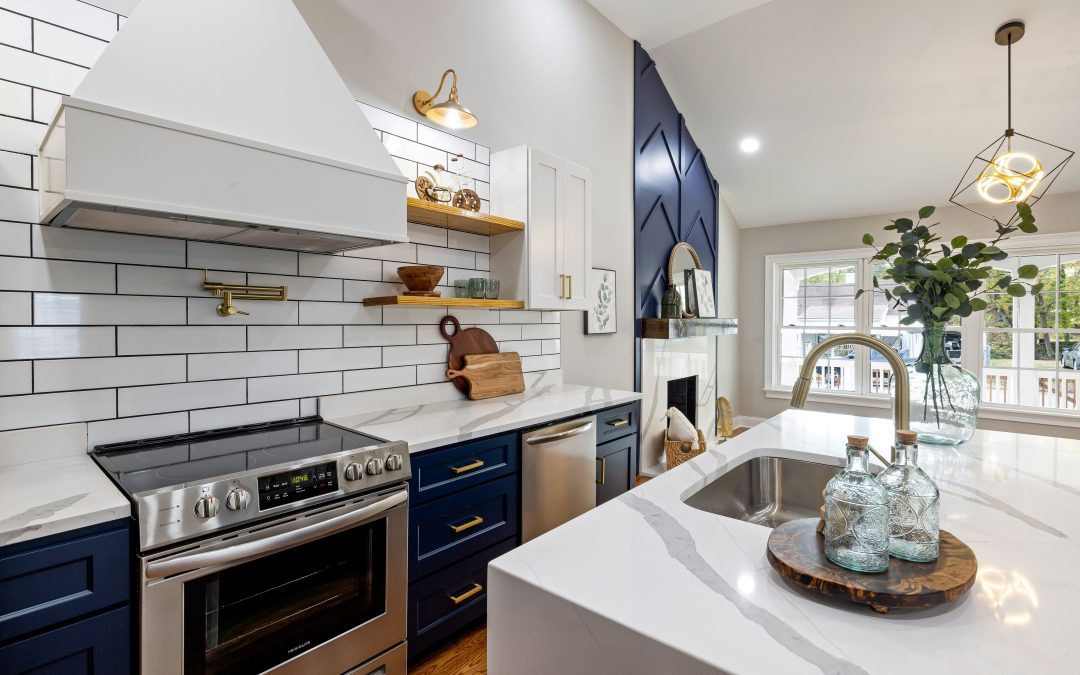
| Mid-range | Roughly $28,000 to $50,000 | Fully custom cabinetry, stone or porcelain benchtop, quality appliance package, new tiling, lighting and electrical |
| Premium | $50,000 to $90,000+ | Bespoke joinery, island, feature materials, layout changes, integrated appliances |
Note: Ranges compiled from 2026 NSW and Wollongong industry pricing guides. Every kitchen is different, and these are market observations, not quotes.
The gap between the budget and mid-range bands is where most of the confusion online comes from. One guide lists a Wollongong kitchen at around $15,000 and another at $48,000, and both are telling the truth. One is pricing a flat-pack refit with the existing plumbing untouched. The other is pricing custom joinery, a stone top and a sparky rewiring the whole run.
Where the money actually goes
Cabinetry is the single biggest line item in nearly every kitchen, usually somewhere between 30 and 45% of the total. That surprises people who assumed the appliances or the stone would dominate. It also explains why two quotes for the same-looking kitchen can differ by thousands: the cabinetry is where the quality decisions hide.
The benchtop is usually next, and it has been a moving target since the engineered stone prohibition changed what is available. The shift toward porcelain and sintered stone has changed pricing and fabrication for Australian kitchens, so a quote from 2023 is no longer a useful comparison point.
After that come appliances, which are entirely your call and can swing a budget by $10,000 without touching a single cabinet. A capable oven, cooktop, rangehood and dishwasher package can be put together for a few thousand, or it can cost more than the cabinetry, depending on how much you care about the brand on the door.
The trades come last in the conversation and first in the surprises. These include plumber, electrician, tiler, and whoever patches the floor where the old kickboards were. Individually, none of them is frightening. Together they are a meaningful slice of the job, and they are the part of a quote most likely to be quietly left out of the cheaper option you compare against.
If one quote is thousands below the others, find out what it excludes before you assume you have found a bargain. Nine times out of ten, the gap is not sharper pricing. It is appliances, or the electrical, or the splashback, sitting outside the scope and waiting to reappear as an invoice later.
Five things that move the number more than people expect.
- Moving the sink. Keeping plumbing roughly where it is will always be the most affordable option. Relocating a sink or dishwasher means new waste and supply runs, which means opening the floor or the wall, which means a bigger plumbing bill and a longer program.
- Drawers instead of cupboards. A bank of deep drawers costs more than the equivalent cupboard, because you are paying for runners and hardware rather than a hinge and a shelf. Most people who have lived with both say it was the best money they spent, but it is a real line item.
- The finish on your doors. The material and finish you choose for doors and panels is one of the biggest single levers in the whole quote. A two-pack painted finish sits well above melamine for the same box behind it.
- A small kitchen is not automatically a cheap kitchen. This one catches everyone. Cabinetry, appliances and trade call-out costs are largely fixed regardless of floor area, so a compact galley often lands at 70 to 80% of the cost of a standard kitchen at the same finish level. Cabinetry is priced closer to the linear metre, and the sparky charges the same to turn up either way.
- What’s behind the old cabinets. Anything discovered during demolition is a variation. Old plumbing, undersized wiring, out-of-square walls and pre-1990 sheeting are all normal findings in Illawarra homes of a certain age, and all of them cost money to put right.
Set money aside that isn’t in the quote.
A 15 to 20% contingency is the standard advice, and it exists for a reason.
Even on a well-scoped job, there are costs that don’t appear on the quote: takeaway for three weeks, a temporary fridge in the hallway, the rug you suddenly hate next to the new floor. None of them is large on their own. Collectively, they are the difference between finishing on budget and finishing annoyed.
There is also the matter of what a quote assumes. Ask early whether appliances are included, because guides and quotes vary on this, and it is the most common reason two numbers that look comparable are not. Ask what happens if something is found during demolition, and how variations are priced. Ask whether the splashback and tiling are in or out. A quote that answers those questions in writing is worth more than one that is $2,000 cheaper and silent on all of them.
Getting a number that actually means something
Online ranges can be useful for setting personal expectations. However, the only figure worth building a budget around is one produced by someone who has stood in your kitchen, measured the run, looked at where the waste pipe goes and asked what you actually cook.
The good news is that the spend tends to hold its value. A well-executed kitchen is consistently one of the renovations that add the most to a home’s value in the Australian market, which is why it is worth getting the specification right rather than the cheapest version of it.
Krauss Kitchens has been designing and manufacturing in Unanderra since 1974, and quotes are fixed with pricing set out upfront. If you want a real figure for your kitchen rather than a range from the internet, a free in-home consultation is the fastest way to get one. Bring your floor plan or just your measurements and a rough idea of what annoys you about the current kitchen. That is usually enough to start.
Figures in this article are market ranges drawn from 2026 industry pricing guides and are provided as general information. They are not quotes and do not represent Krauss Kitchens pricing. Costs vary with scope, materials, site conditions and appliance selections.