
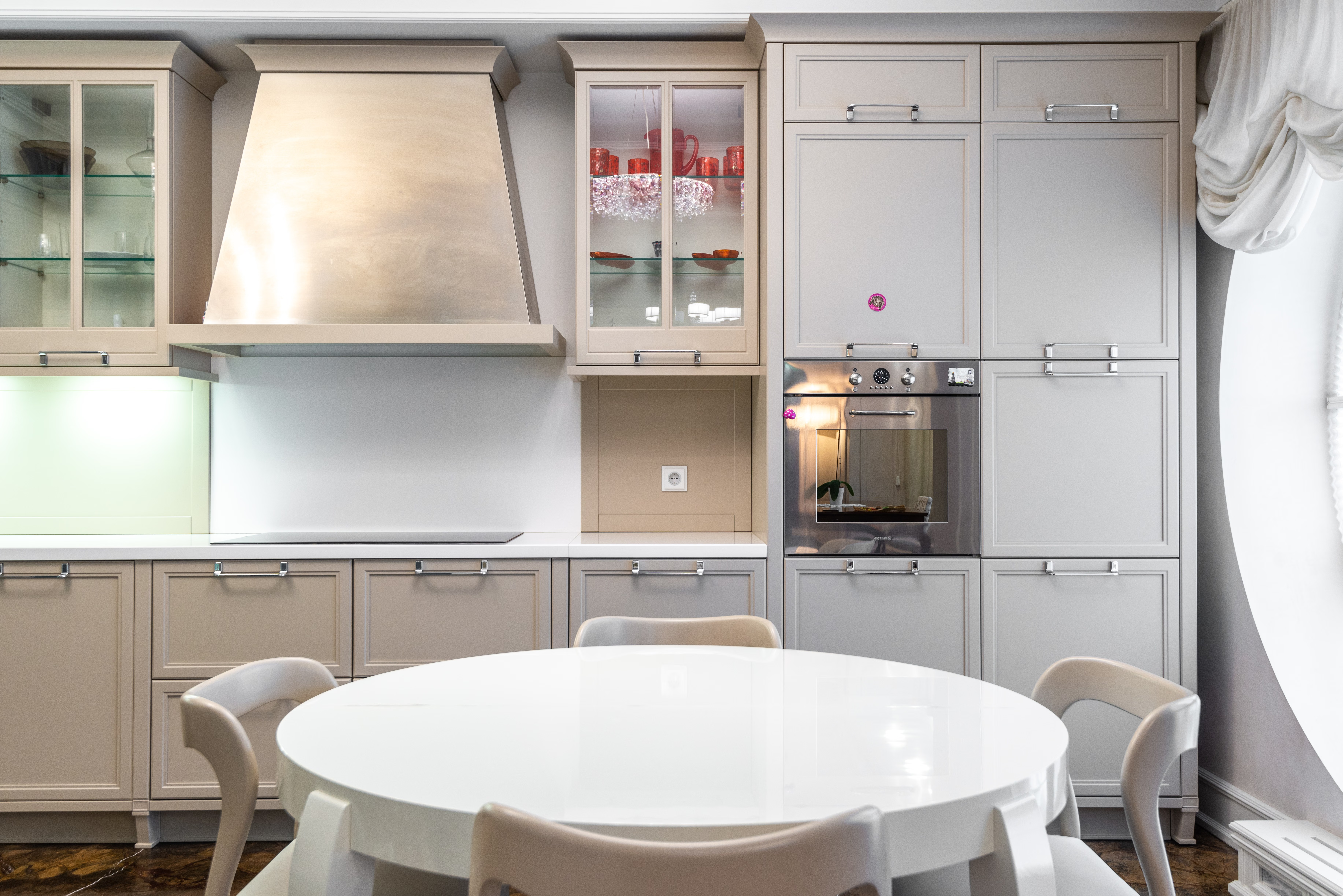
Let’s be honest. Modern kitchens are expected to do a lot more than they once did.
The air fryer sits on the benchtop. So does the toaster, the kettle, the coffee machine, and the stand mixer that only comes out on Sunday mornings. By the time everything has a permanent spot, there is barely room left to prepare the actual meals.
It’s really a challenge many Australian kitchens quietly face, and an appliance garage cabinet has become a popular way to manage it. It keeps frequently used appliances close at hand while helping the kitchen feel cleaner, calmer, and far less cluttered.
What Is an Appliance Garage?
An appliance garage is a dedicated section typically integrated into the upper or lower cabinetry. This is designed to house small kitchen appliances while keeping them hidden behind a door or roller shutter. When you need the toaster, you open it. When you’re done, you close it. The benchtop looks clean again—yes, that easy!
The concept has been around in kitchen design for decades, but there’s a genuine resurgence now as air fryers, coffee stations, and espresso machines have become standard fixtures in Australian homes. These appliances are bulky, used daily, and not easy to move in and out of a pantry every time you want them.
A built-in appliance garage gives them a home that’s actually convenient. Most designs are even built with a power outlet inside the cabinet so appliances can stay plugged in and ready to use, without any cable management drama.
Where to Place an Appliance Garage in Your Kitchen
Placement is where most people get tripped up, and it’s worth thinking about before anything gets built.
The most common position is at benchtop level, built into the lower cabinetry. The door sits flush with the cabinet face and lifts, slides, or rolls up to reveal the appliances underneath. This works particularly well for heavy items like the air fryer or coffee machine. You are not lifting them down from height; you’re just using them where they sit.
Upper cabinet appliance garages work well for lighter, more frequently used items like the toaster or kettle, provided the cabinet base sits at a comfortable working height. Too high, and it defeats the purpose; the ease of access is what makes the whole thing functional.
Corner cabinet appliance garages are a smart option in kitchens where benchtop real estate is tight. A corner section that would otherwise become dead storage gets converted into a working station—the appliance lives there, the outlet is right behind it, and the bench stays clear.
A few placement considerations worth thinking through:
- Position the garage close to a power source to keep the internal wiring straightforward.
- Allow enough cabinet depth for the appliance and door clearance—air fryers, in particular, need more room than you’d expect.
- Consider the workflow: the coffee station near the cups, the toaster near the bread, and so on.
Appliance Garage Ideas Worth Considering
The design flexibility of a built-in appliance garage is one of its main strengths. There’s no single template. It gets designed around your kitchen, your appliances, and how you actually use the space.
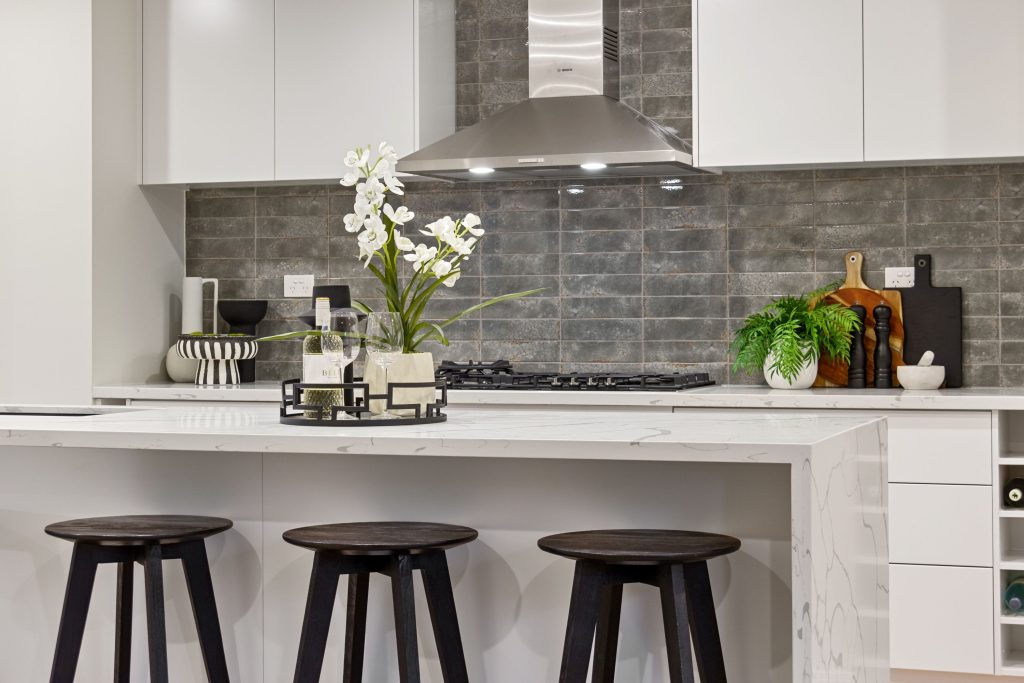
Roller shutter doors are probably the most popular choice right now. They slide up neatly out of the way, require no swing clearance, and give a clean, contemporary look that suits modern kitchen cabinetry well. Tambour shutters in particular have become a go-to for kitchens with a sleek, handleless aesthetic.
Lift-up doors work well in lower cabinets where the door needs to clear the appliance without getting in the way. Bifold options fold back against the cabinet walls, keeping the opening fully accessible without the door swinging into the workspace.
A kitchen appliance garage idea can also be built around a specific station. Let’s say, a full coffee setup with grinder, machine, and pod storage. Custom cabinetry allows the interior to be fitted out exactly to spec—shelving, hooks, and a small drawer for accessories. It works because it was designed for that purpose.
The benchtop material inside and around the garage matters, too. Appliances generate heat, steam, and occasional spills, so a surface that handles all of that without fuss is worth choosing deliberately. Our benchtops range covers sintered stone, granite, marble, laminate, and concrete, and they are all available in profiles that work cleanly with integrated cabinetry.
The Air Fryer Problem, Specifically
Air fryers deserve their own mention because they’ve become the appliance most responsible for benchtop chaos in Australian kitchens right now. They are large, they run hot, they need clearance above them during use, and people use them almost every day, which means storing them in a cupboard isn’t really practical.
The most functional approach is a lower-cabinet appliance garage with sufficient internal height for the air fryer to operate while the door is open. You roll up the shutter, the air fryer runs in place, and when it’s done, you close it back up—no lifting, no moving, no benchtop footprint.
Some designs include a vented back panel to help manage heat buildup inside the cabinet, which is worth discussing with your kitchen designer if you’re planning the garage specifically around an air fryer.
How It Fits Into a Custom Kitchen Design
An appliance garage works best when it’s planned from the start, not retrofitted into an existing layout. The cabinet dimensions, door type, outlet positioning, and surrounding cabinetry all need to work together. That is actually a conversation best had during the design stage.
At Krauss Kitchens, we design custom kitchens around how people actually use them. If benchtop clutter is something you’re trying to solve, an integrated appliance garage is one of the first things we’d talk through during a design consultation. It’s a relatively simple addition that has a real impact on how the kitchen looks and functions day to day.
You can browse our kitchen range to get a sense of the styles and configurations we work with, or take a look at our custom kitchens and new kitchen options if you’re at the beginning of a build or renovation.
When you are finally ready to talk through the layout, book a kitchen consultation with our team, or visit our showroom in Unanderra to see the finishes and cabinetry options in person.