If you’ve been keeping an eye on the Australian renovation scene lately, you’ve likely heard the big news. The landscape of the Australian kitchen has shifted—literally. As of mid-2024, a landmark ban on engineered stone containing high levels of crystalline silica came into effect. For years, quartz surfaces were the go-to because they were tough and looked great, but the health risks to the tradespeople cutting those slabs became impossible to ignore.
So, where does that leave you if you’re planning a build in 2026? It leaves you in a very exciting spot, actually. While one door has closed, a much more sophisticated one has opened. We are seeing a massive move towards ultra-compact surfaces. If you’re looking for a surface that is tougher than granite, more heat-resistant than marble, and completely safe for the legends who build it, it’s time to talk about porcelain benchtops and their high-tech cousin, sintered stone.
What Exactly is Sintered Stone?
We get asked this at the gallery almost every day. “Is it just a big tile?” Well, not exactly. Think of sintered stone benchtops as a high-speed version of how nature makes a diamond or a piece of granite. Manufacturers take raw natural minerals—clays, feldspar, and silica (0% crushed, the safe, non-respirable kind)—and put them under immense pressure and heat.
We’re talking about 25,000 tonnes of pressure and temperatures exceeding 1200°C. This process, called sintering, fuses the particles so tightly that the slab becomes almost entirely non-porous. Unlike the old engineered stone that relied on resin glue to hold everything together, a sintered stone benchtop is a solid, mineral-based masterpiece. It’s a win for homeowners, as it offers a level of durability that traditional materials just can’t give.
Porcelain: The Sophisticated Heavyweight
Porcelain follows a similar high-heat path but often uses even more refined clays. What makes porcelain kitchen benchtops in Australia so popular right now is the printing technology. These slabs can mimic rare, expensive Italian Calacatta marble or raw industrial concrete with such precision that even an expert has to look twice.
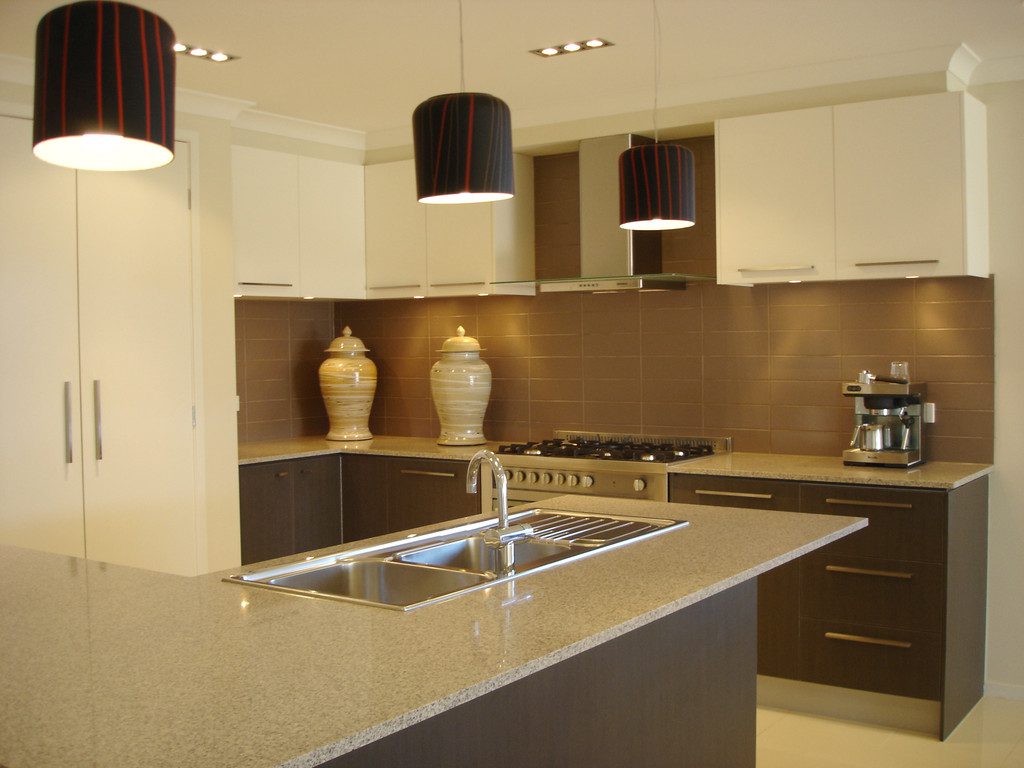
One of the best things about a porcelain benchtop panel is its UV stability. Traditional resin-based stones would yellow or crack if they sat in the harsh Australian sun near a big window. Porcelain doesn’t care about the sun. You could practically install your kitchen in the middle of the Outback, and that white marble look would stay crisp for decades. This makes it a perfect choice for those transition areas where your indoor kitchen meets an alfresco bar.
Why These are the Ultimate Alternatives
When people ask, “What is the best stone for kitchen benchtops?” the answer has shifted from “engineered” to “ultra-compact.” When we roll up our sleeves and look at the performance, these benchtop materials win on almost every front. First, let’s talk heat. You know that heart-stopping moment when someone puts a hot Le Creuset pot directly onto a bench? With old engineered stone, the resin would scorch. With sintered stone, you can take a tray straight out of a 220°C oven and set it down without a second thought.
Then, there’s the scratch and stain factor. Because the surface is so dense, even the most aggressive red wine spill or a stray lemon wedge won’t leave a mark. It’s virtually a zero-stress surface. For a busy family home, that peace of mind is worth every cent of the investment.
The Design Edge: Slim or Substantial
From a designer’s perspective, these materials offer a versatility that older stones didn’t. Standard porcelain benchtops can be produced in 6mm or 12mm thickness. This allows for a very sleek, minimalist European look. However, if you love the look of a massive, chunky stone block, we can mitre the edges. This is a craft where we join two pieces at a 45-degree angle to create the illusion of a 60mm or even 100mm thick slab.
Naturally, the porcelain kitchen benchtop can cost slightly higher than the old banned materials, mainly due to the complexity of the installation and the specialised tools required to cut such a dense material. But when you factor in the lifetime of the product and the fact that it won’t ever need sealing or polishing, the value becomes very clear.
Craftsmanship Still Matters
Here is the truth: porcelain and sintered stone are harder to work with than the old stuff. They require specialised diamond tools and a steady hand because the material is under high tension. This isn’t a job for a DIY approach. To get those perfect, invisible joins and crisp edges, you need specialists who understand the tension release cuts required for these high-performance slabs.
The silica ban was a wake-up call for the industry, but it has pushed us into a new era of better, safer, and more beautiful materials. These alternatives aren’t just back-up plans—they are the new gold standard for the modern Australian home.
At Krauss Kitchens, we’ve mastered the nitty-gritty of these new surfaces. Our goal is always to deliver your dream kitchen, expertly crafted. We take pride in staying ahead of the curve so you can enjoy a kitchen that is safe for the planet, safe for the makers, and stunning for your family.
Let’s find the perfect benchtop for your new kitchen. Contact us today.