
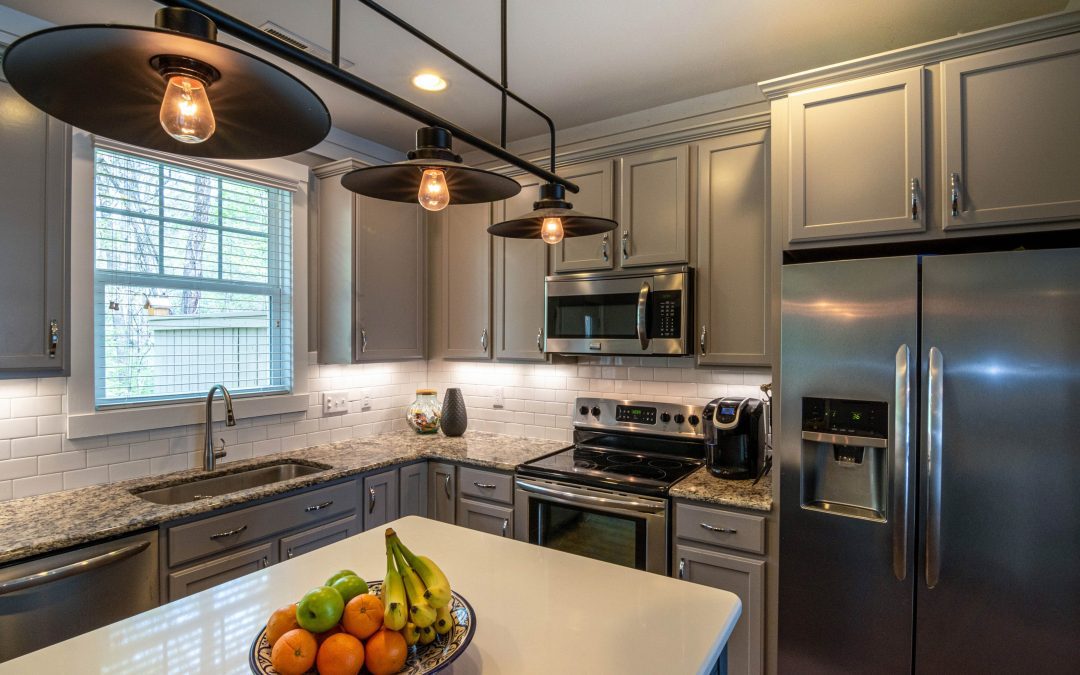
Let’s be honest, the first thing buyers notice about a kitchen usually isn’t the oven, the cooktop or the dishwasher. It’s the overall impression. The overall feel. The vibe.
Walk into two homes with similar renovation budgets, and one kitchen can immediately feel more expensive than the other.
Often, the difference has little to do with premium materials. It’s simply the way everything fits together. Cabinetry lines up cleanly. Appliances don’t interrupt the space. The layout feels effortless to use.
Those details are easy to overlook during a kitchen renovation, yet they’re often what buyers respond to first.
That’s why the discussion around integrated kitchen appliances versus freestanding kitchen appliances goes beyond appearance. Both have their place. The better option depends on the home, the layout and the expectations of the people most likely to buy it.
People Judge the Kitchen as a Whole
Buyers rarely compare appliance specifications during an inspection. They ask themselves different questions. Does the kitchen feel spacious? Is there enough bench space? Does everything look intentional?
Those impressions form within minutes. A refrigerator sticking out beyond the cabinetry or an oversized cooker squeezed into a tight corner won’t necessarily stop a sale, but small design compromises add up.
On the other hand, a kitchen that feels balanced gives buyers confidence that the renovation has been properly planned.
That is often more valuable than a long list of premium appliance brands.
Why Integrated Appliances Continue to Grow in Popularity
Refrigerators disappear behind cabinetry panels. Dishwashers blend into cupboards. Rangehoods become almost invisible. The goal is not to hide expensive appliances but to let the cabinetry and overall design take centre stage.
In open-plan homes, where the kitchen is always visible from the dining and living areas, that cleaner finish can make the room feel larger and more refined.
An integrated refrigerator in Australia does not offer a different cooling system simply because it’s integrated. What changes is the appearance. Matching cabinet panels create uninterrupted lines, helping the kitchen feel cohesive instead of dominated by individual appliances.
Most buyers won’t point to that as the reason they like the kitchen. They’ll simply say it feels well-designed.
Freestanding Appliances Still Make Sense
Integrated doesn’t automatically mean better.
Many high-quality renovations still feature freestanding kitchen appliances, and for good reason. They’re generally easier to replace, offer more flexibility when upgrading individual appliances and don’t lock homeowners into cabinetry built around one specific model.
A freestanding gas stove and oven can also suit traditional, Hamptons or country-inspired kitchens, where exposed appliances complement the overall style instead of distracting from it.
Long-term ownership matters, too. Replacing one freestanding appliance years later is often simpler and less expensive than modifying cabinetry designed for integrated products.
A practical kitchen that works well will usually leave a stronger impression than one filled with expensive appliances that don’t suit the space.
Built-In vs Freestanding Oven
The choice between a built-in and freestanding oven usually becomes clearer once the kitchen layout has been planned.
Built-in kitchen appliances give designers greater flexibility because the oven and cooktop don’t have to sit together. Many homeowners prefer wall-mounted ovens positioned at a comfortable height, while separate cooktops create more options for storage and bench space.
A freestanding cooktop and oven keep everything in one unit, making installation more straightforward and future replacements easier.
Neither option guarantees better resale.
Buyers are more likely to notice whether the oven feels like it belongs in the overall layout than whether it’s built-in or freestanding.
Small Design Choices Have a Bigger Impact Than Most People Expect
Refrigerators tend to get most of the attention, but they’re only one piece of the puzzle.
A freestanding dishwasher in Australia can work just as well as an integrated model if it suits the design. The same applies to ovens, cooktops and even smaller appliances. What matters is consistency.
A kitchen with visible stainless-steel appliances can feel just as polished as one with concealed appliances, provided the finishes complement each other. The opposite is also true. Mixing styles without a clear plan often makes a renovation feel unfinished, even when every appliance is brand new.
It’s rarely one appliance that changes a buyer’s mind. It’s how comfortably everything sits together.
The Layout Will Always Matter More
Homeowners often spend weeks comparing appliance brands before they’ve finalised the floor plan.
In reality, the layout has a much bigger influence on how a kitchen performs day-to-day.
Storage should be within easy reach. There should be enough preparation space beside the cooktop. The fridge door needs room to open properly without blocking walkways. These practical details shape the experience of using the kitchen far more than premium finishes alone.
That’s why we encourage homeowners to settle the layout before making appliance decisions. Once the workflow feels right, choosing the right kitchen appliances becomes much easier.
If you’re still refining your plans, these kitchen layout ideas for small spaces show how thoughtful planning can improve storage, movement and appliance placement, regardless of the kitchen’s size.
Industry planning guidelines consistently recommend locking in your layout early so appliance placement, workflow, and storage work together from the start.
Think Beyond Today’s Trends
Resale is never about one feature.
A buyer looking at a luxury home may expect integrated finishes throughout the kitchen. Someone searching for a family home may place greater value on practicality and the ease of replacing appliances in the future.
Both are reasonable expectations.
Trying to copy the latest trend doesn’t always add value. A kitchen that suits the style of the home, the neighbourhood and the people most likely to live there will generally age much better than one designed around what’s currently popular.
That’s worth keeping in mind whenever you’re weighing up integrated and freestanding options.
Planning the Kitchen as One Complete Space
The best kitchens don’t feel like a collection of individual products.
Everything works together, from the layout and cabinetry to storage, lighting and appliance selection. When those decisions are made at the same time, the finished space feels more comfortable to use and more cohesive to look at.
That’s the approach we take at Krauss Kitchens. Every project starts with understanding how the kitchen will be used before recommending appliances, finishes or kitchen accessories. It keeps design decisions practical instead of treating them as separate upgrades.
If you’re planning a renovation, a kitchen consultation is a good place to compare integrated and freestanding options within the context of your own home. You can also explore our recent projects or visit our showroom to see how different appliance configurations work in completed kitchens before making a final decision.