
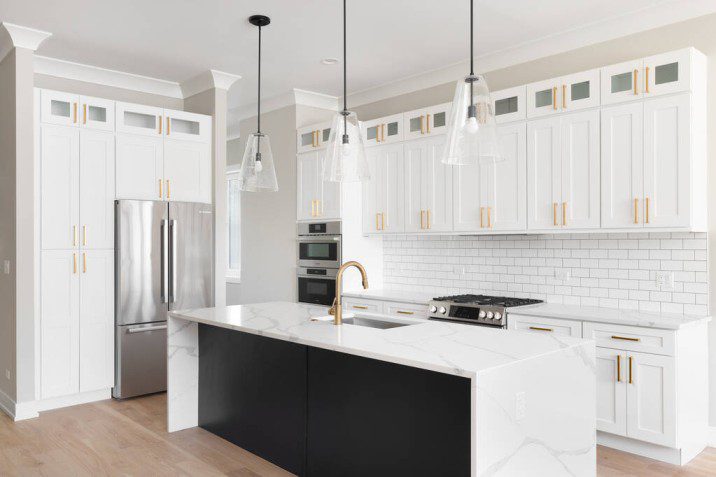
Some kitchen features quietly do their job. But a waterfall benchtop isn’t one of them.
It’s a detail that immediately draws attention. When designed well, it can completely transform how the entire kitchen looks and feels. People tend to either fall in love with it instantly or feel unsure but intrigued. There’s rarely much middle ground. So, let’s unpack what a waterfall benchtop really offers and how to decide if it suits your kitchen design.
What Is a Waterfall Benchtop, in Plain Terms?
A waterfall benchtop is a countertop where the material doesn’t stop at the edge of the cabinets—instead, it continues vertically down one or more sides of the cabinet base, creating a continuous, flowing surface reminiscent of a waterfall.
Whether you’re doing a kitchen renovation or building from scratch, waterfall benchtops tend to catch the eye of both homeowners and designers. But like any design choice, they’re about more than looks—they also affect how the kitchen functions, what it costs, and how the space is laid out.
Waterfall Kitchen Island Bench as a Design Feature
At the heart of the waterfall benchtop’s appeal is its elegance and sculptural look. This design speaks luxury without shouting it. Here’s what many designers highlight:
1. It Anchors the Kitchen Visually
A waterfall island can instantly become a visual anchor.
In open-plan homes, it helps visually ground the kitchen zone. That vertical drop adds weight and presence, stopping the kitchen from feeling like it’s just floating in the room.
It can also work great in large family kitchens where the island does double duty— food prep during the day, homework station in the afternoon, wine-and-chat zone at night.
2. It Creates a Clean, Continuous Look
There’s something calming about not seeing where one surface ends and another begins. By extending the same material down the sides, waterfall benchtops create cohesion and visual flow.
This is especially noticeable with materials that have natural movement. Think marble-style veining or soft concrete tones. When the pattern flows down the side, it adds depth without needing any extra decoration. And it photographs incredibly well! Not the main reason to choose one, but worth mentioning.
3. It Works with Many Styles—But Especially Modern Ones
Waterfall benchtops often feel most at home in contemporary or transitional kitchens where clean lines and minimal detailing are key.
That doesn’t mean waterfall edges can’t work in other spaces. They just require a bit more planning. In kitchens with more character or traditional elements, the surrounding cabinetry, kitchen lighting, and hardware should be chosen thoughtfully. That way, the whole kitchen feels intentional and well-balanced.
The Practical Upsides People Don’t Always Mention
Waterfall benchtops aren’t just about aesthetics. Some everyday benefits only become obvious once you’re living with one.
1. They Protect Cabinetry
Island ends get knocked all the time. Bags bump into them, stools scrape past, and kids drive toy cars straight into them like it’s their job.
A waterfall edge covers that vulnerable cabinet side with something far more resilient. Over time, that protection can make a huge difference when it comes to reducing visible wear and tear (especially in busy households).
2. They’re Easy to Clean
No awkward ledges. No exposed kitchen panels soaking up spills.
If someone sloshes a drink over the edge—and it happens more often than you’d think—it runs down the stone, not into timber. A quick wipe and you’re done. In a busy kitchen, even those small details make everyday cleaning noticeably easier.
3. They Signal Quality
Like it or not, design sends a message.
A waterfall benchtop often comes across as carefully thought-out and high-end. Buyers tend to see it as a sign the kitchen is well-made, and visitors usually take it in as a subtle mark of style. It won’t automatically increase resale value, but it does help set a positive first impression—and first impressions stick.
Waterfall Benchtop Materials Compared
Not all benchtop materials behave the same once they wrap down vertically. What looks great as a horizontal surface doesn’t always translate well when it’s exposed from bench height to floor level, where it’s more visible—and more likely to get knocked, kicked, and brushed past daily.
Choosing the right material requires understanding how different surfaces stand up to the rigours of vertical exposure.
1. Laminate Waterfall Benchtop
Laminate is the most budget-friendly option, which makes it especially tempting during a kitchen renovation, when costs add up quickly. Modern laminates have come a long way in terms of colour and texture, and some stone-look finishes are surprisingly convincing at first glance.
The challenge is in the details, though. Creating a clean waterfall edge with laminate is difficult. Joints are often visible at the mitres, edge profiles are bulkier, and exposed corners are more prone to chipping or lifting over time. Once that happens, it’s hard to unsee.
Laminate can work in low-impact spaces, short-term homes, or rentals where durability expectations are lower. But in a long-term family kitchen, a laminate waterfall often feels like a visual compromise.
2. Stone Waterfall Benchtop
Stone is where waterfall benchtops really come into their own. Both sintered stone and natural stone deliver the solid, sculptural feel people expect from this design.
- Sintered stone is consistent in colour and pattern. That makes aligning veins and mitred edges much easier. It’s durable, low-maintenance, and handles everyday wear well—a big reason it’s so popular for waterfall islands.
- Natural stone, on the other hand, brings variation and depth that can’t be replicated. Each slab is unique, which can be a strength or a challenge. Vein alignment becomes more critical, and careful slab selection is super important.
3. Timber Waterfall Benchtop
Timber waterfall benchtops offer a very different feel—warmer, softer, and less formal than stone. They can be stunning in the right setting, particularly in homes that lean toward natural or Scandinavian-inspired design.
That said, timber asks more of you. Vertical timber surfaces are exposed to scuffs, dents, moisture, and temperature changes. Even with a good finish, they will age, mark, and develop character over time.
For some homeowners, that’s part of the appeal. For others, it can feel like constant maintenance. Timber waterfalls are best suited to lower-traffic islands, households without heavy daily wear, or designs where a bit of patina is welcome rather than avoided.
4. Marble Waterfall Benchtop
Marble is the undeniable showstopper. The veining, the movement, the way it flows from benchtop to floor—few materials create the same level of visual drama.
But marble doesn’t pretend to be practical. Etching from acids, staining, and gradual patina are all part of living with it. On a waterfall edge, these marks are more visible because the surface sits right in your line of sight.
Some people love the softness and history that develops over time. Others find it stressful. It’s a choice driven by emotion and aesthetics rather than convenience.
5. Concrete Waterfall Benchtop
Concrete brings an architectural, almost monolithic quality to a kitchen. These benchtops are heavy, both visually and structurally, and tend to work best in larger spaces where they won’t overwhelm the room.
That weight also means the surface needs proper protection. Without good sealing, a rogue coffee spill or splash of tomato sauce can leave a mark faster than you’d expect.
Installation isn’t something to skimp on either. If it’s done poorly, you’ll end up with rough corners, uneven textures, and an unfinished look. So, execution really matters here more than ever.
How Much Does a Waterfall Benchtop Cost?
The cost of a waterfall benchtop can range widely, from a few hundred dollars to well over several thousand.
A few quick takeaways:
- Material matters most. Stone or porcelain look stunning but are significantly pricier than lightweight alternatives.
- Mitred waterfall edges add cost because the fabrication and installation are more intricate. Expect to pay more than a standard flat benchtop.
- Installation costs vary depending on your location (e.g., Sydney vs regional areas) and whether trades need to reinforce cabinetry or align veins.
Is a Waterfall Countertop Worth It?
Ultimately, determining if this feature is right for you comes down to a few final considerations:
- Visual Impact: Do you want a kitchen anchor that feels solid, sculptural, and intentional?
- Spatial Flow: Do you have the physical room to let the vertical panels breathe without crowding the walkways?
- Practical Trade-offs: Are you comfortable investing a bit more of your budget into a design detail that prioritises form and protection over extra cupboard space?
If you value a kitchen that feels grounded and meticulously finished, a waterfall benchtop is an investment that pays off every time you walk into the room. If your priorities lie elsewhere, a high-quality standard benchtop remains a timeless, beautiful, and highly functional alternative.
Create Your Signature Look with Krauss Kitchens
At Krauss Kitchens, we believe that great design is about making choices that genuinely suit how you live—long after the renovation dust settles.
So, whether you are drawn to the seamless flow of a sintered stone waterfall or the classic simplicity of a standard edge, our team is here to help you navigate the materials and logistics that make a kitchen feel like home.
Ready to see how a waterfall benchtop could transform your space?
Contact Krauss Kitchens today to book a design consultation or visit our showroom to explore our range of premium materials in person.