
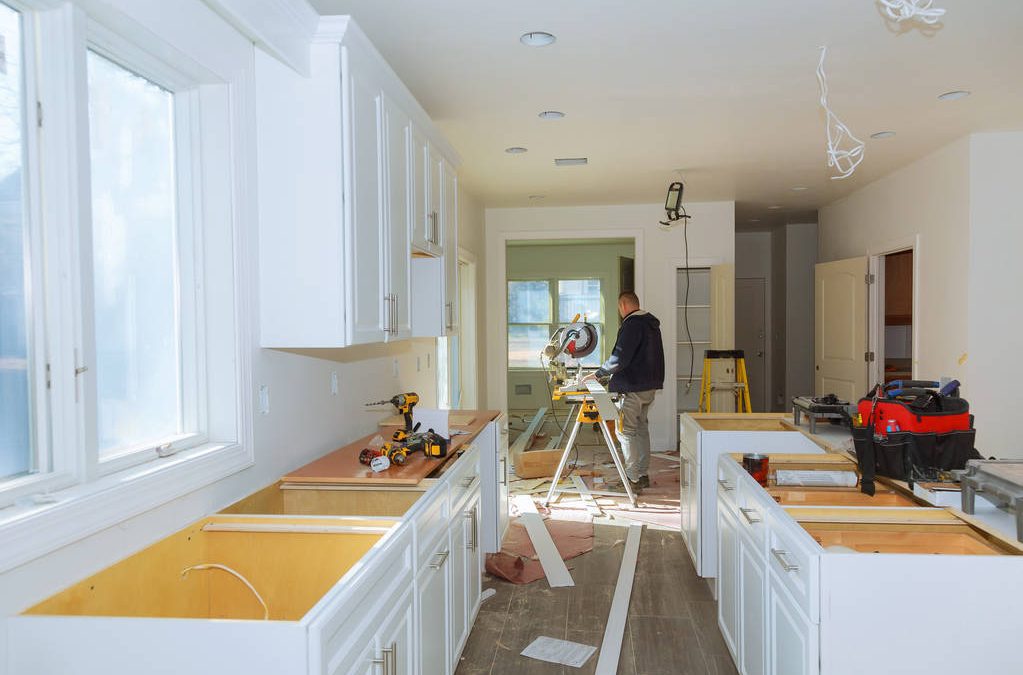
For a few weeks, you’re going to be camping in your own house. The good news is that it is genuinely fine, and most families tell us afterwards that the eating arrangements were far less dramatic than they had braced for.
The households that sail through are not the ones with the biggest budget or the best takeaway options. They are the ones who spent an hour setting things up properly before the demolition crew arrived. So here’s how to do that.
Start by choosing where it goes.
Pick your spot first, because every other decision follows from it. You want somewhere with a power point, water within reasonable walking distance, and crucially, somewhere outside the path your trades will be walking all day. A dining room, a garage, a laundry or a covered outdoor area all work well.
The one mistake worth avoiding is setting up in the room directly next to the kitchen. It feels convenient on day one, but it’s dusty and loud by day three. Put a door between you and the work if you possibly can.
If you are renovating an apartment, your options are tighter and worth thinking through early, since a balcony or a spare bedroom may be all there is. And if you happen to have a butler’s pantry or second prep space that isn’t being touched, you’re in excellent shape already.
Then, before anything else goes in, put down a trestle table or an old benchtop offcut. Having one proper surface to work on changes everything.
The appliances worth keeping plugged in
You need fewer than you think. A workable temporary kitchen setup during renovation usually comes down to five things.
- A kettle for morale.
- A microwave, which does far more than reheating if you are willing to experiment.
- An air fryer or benchtop oven, which handles most of what a real oven does for a family of four.
- A single induction hob, which is the quiet hero of this whole arrangement and costs very little.
- A bar fridge or your existing fridge wheeled into the new spot.
That last one depends on what you have. A freestanding appliance can usually be unplugged and relocated for the duration, which is one of its genuine practical advantages. Integrated units generally stay where they are and come out with the cabinetry.
Worth checking: how many of those are running off the same circuit. A kettle and an induction hob on one power board in a garage is a conversation with your switchboard waiting to happen. Spread them across different outlets.
Washing up is the harder problem.
Everyone worries about cooking. Almost nobody worries about the dishes, and the dishes are what actually wear people down.
The laundry trough is the usual answer, and it is a good one. A bathroom basin works in a pinch. An outdoor tap with a tub is better than it sounds, especially in an Illawarra summer. Whichever you choose, set up a two-tub system with a drying rack beside it so the washing up has somewhere to go rather than migrating across the house.
Then, make less of it. Paper plates for a few weeks is not a moral failing. One good pot, one good pan, a chopping board and the knives you actually use will cover almost everything. Everything else can stay packed.
One small thing that saves a lot of grief: ask your builder which days the water and power will be isolated, and fill a couple of jugs the night before. It is usually only a few hours while the plumber or electrician is working, but discovering it at seven in the morning with a kettle in your hand is a rough way to start a Tuesday. A quick message on the morning of is a reasonable thing to ask for.
The timeline has a shape.
Here is the part most people aren’t told, and it’s worth knowing in advance.
Being without a kitchen is not one flat stretch. It runs in stages: demolition, then services rough-in, then the cabinets go in, then the benchtop, then the sink and appliances get connected, then the splashback.
The stretch that surprises people sits between the cabinets and the benchtop. Stone is templated after the cabinets are installed because it has to be measured against the real thing rather than a drawing, and then it goes off to be fabricated. So for a week or so, depending on the material, you can walk into a room that looks almost like a finished kitchen and still have no sink, no cooktop and nowhere to put anything down. It is a strange few days.
It is also completely normal, and it is the reason we would rather you kept the temporary setup going until the sink is actually running. Packing it away the moment the cabinets land is the one thing we would gently talk you out of. Ask your cabinetmaker for the expected lead time on your particular stone or porcelain at the start, and plan the hardest week around it.
Pack smart rather than thoroughly.
You are going to pack the kitchen twice: once to get it out, and once to put it back. Make the second one easy.
Three groups are enough.
- Daily, which goes to the temporary setup.
- Later, which is everything you will want back but not this month.
- Honestly, never, which is the bread maker, the fondue set and the nineteen plastic containers with no lids.
That last box does not need to come back, and a renovation is the most painless opportunity you will ever get to let it go.
Also, label by cupboard rather than by contents. When the new kitchen goes in, you will be unpacking into a layout you chose deliberately, so a box marked “near the oven” is more useful than one marked “baking”. It is also the right moment to think about how it all gets stored, because new drawer inserts and organisers work best when you decide what lives where before the boxes come back, not after.
One more thing. Tape plastic sheeting over the doorway between the work zone and the rest of the house, and put a damp towel along the bottom. Dust travels further than seems physically reasonable.
Where to start with your kitchen renovations
If you are reading this before anything has been booked, the temporary kitchen is the last thing to sort out, not the first. Settle the layout and the cabinetry, get a program with real dates on it, and the camping arrangements will fall into place around them.
Krauss Kitchens has been designing and manufacturing in Unanderra since 1974, and part of a good kitchen renovation is being told honestly how long each stage takes so you can plan your household around it. A free in-home consultation is where that conversation starts, and it is worth having before you buy a single bar fridge.
And for what it is worth: almost everyone says the first proper meal cooked in the new kitchen was worth the weeks of toast.